Deep Field Astronomy: Reading the Universe's Baby Pictures
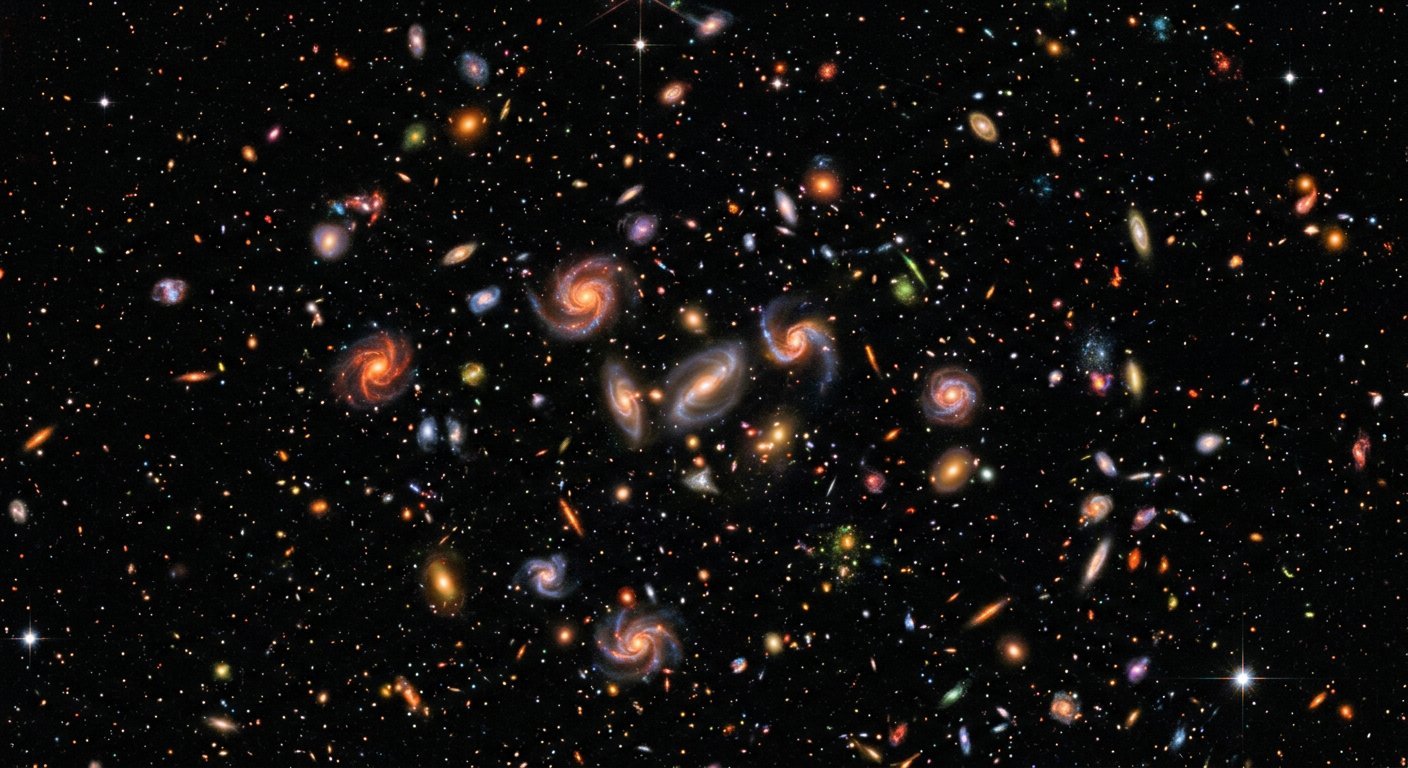
Point a space telescope at a seemingly empty patch of sky, collect light for days, and the darkness resolves into thousands of galaxies. A deep field is the closest thing astronomy has to a time machine.
Because light travels at a finite speed, the faintest, reddest smudges in these images show galaxies as they were within a few hundred million years of the Big Bang.
Surprisingly mature galaxies
Infrared deep fields have revealed galaxies in the early universe that appear brighter and more structured than many models predicted, forcing theorists to revisit how quickly the first stars and black holes assembled.
Why it matters
Deep fields anchor our entire cosmic timeline: star-formation history, the growth of supermassive black holes, and the reionisation of the universe are all calibrated against them. Each new, deeper image is another page of the universe's photo album — read backwards.

Dr. Maryam Khalid
Astronomer · Exoplanet Systems
Dr. Maryam Khalid searches for and characterises rocky exoplanets around M-dwarf stars using transit photometry and radial velocity follow-up. She is particularly interested in the atmospheres of temperate terrestrial wo… View portfolio →
💬 Comments (0)